Credit: Stephen Fielding

Credit: Stephen Fielding

cemetery
Jesse Gibson of Hackney, 1804
Portland stone mausoleum of Sir Joseph Bazalgette, composed of an obelisk above a square rusticated base, with steps leading down to the arched entrance of the vault. Originally built for a different man, John Anthony Rucker, Bazalgette updated the mausoleum to its current look in c.1886.
Wimbledon, Wimbledon Park
Wimbledon
493, 200, 93
The walk from Wimbledon and Wimbledon Park stations is uphill. Buses run regularly from Wimbledon station to Wimbledon Village.
The path is over grass and between graves but generally accessible. Details: habitatsandheritage.org.uk/planyourvisit_bazalgettemausoleum
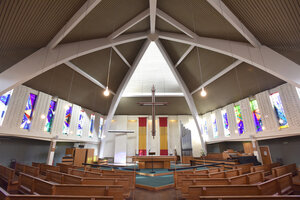
Toilet facilities and refreshments will be available in Fellowship Hall near the church. St Mary's Church will also be open to visitors.
Credit: Stephen Fielding
Credit: Stephen Fielding
Sir Joseph Bazalgette (1819-1891) is credited with creating the London sewer system in response to growing pollution and disease. He created large underground tunnels which took effluent to new pumping stations at Abbey Mills and Crossness. Balzagette’s sewers are still used in much of the city and are only now being supplemented by the Thames Tideway tunnels. His designs reshaped London; he created the Thames Embankments, redesigned several prominent river crossings such as at Hammersmith, Putney and Battersea, and created new streets and parks. Bazalgette's achievements are viewed as a major contributing factor for reducing cholera outbreaks and improving the health of Londoners.
The mausoleum was first built for John Anthony Rucker, a banker, merchant, and slave owner, who owned extensive coffee and sugar plantations in Grenada. The original design featured a pyramid where the obelisk now stands. The lower section of the mausoleum remains to this day.
His nephew, who inherited the estates upon his uncle’s death, went bankrupt in the 1830s and much of the family's property was sold. The mausoleum was sold to the Bazalgette family in c.1886. There is no known connection between Bazalgette and Rucker, who died 20 years before Bazalgette was born. It is believed that Bazalgette bought the tomb for his family as the churchyard was at full capacity.
Habitats & Heritage has received funding from the National Lottery Heritage Fund to conserve, research and educate about the mausoleum, Bazalgette, and Rucker.
The mausoleum is experiencing some structural issues that need repairing to avoid further damage.
For more information please visit our website:
habitatsandheritage.org.uk/get-involved/our-projects/sir-joseph-bazalgettes-mausoleum/