sport
Hopkins Architects, 2017
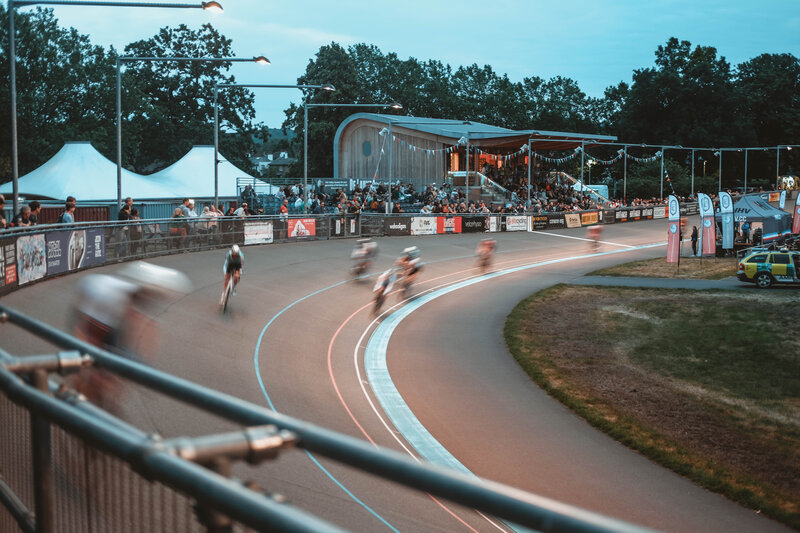
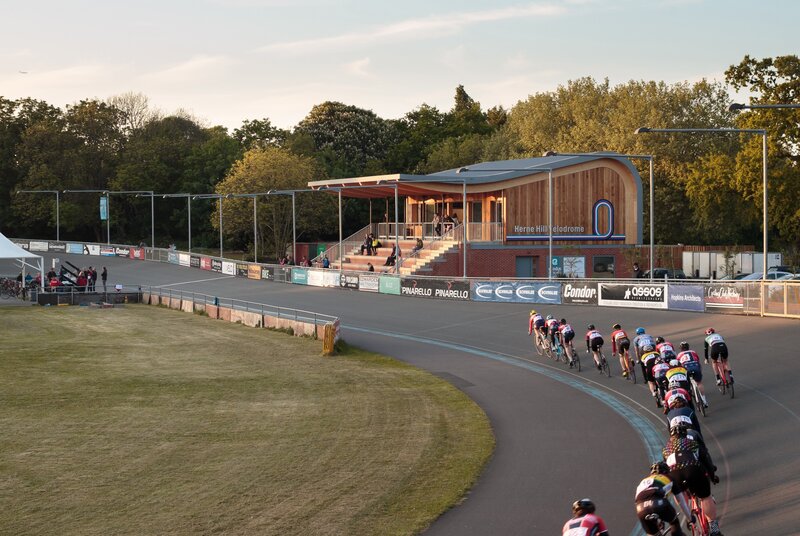
Herne Hill Velodrome, opened in 1891, hosted track cycling events for the 1948 Olympics, is now home to a thriving grassroots cycling facility - hosting everything from Learn to Cycle to local and international racing events. HHV overcame the threat of closure in the early 2000s, and a new pavilion, designed by Mike Taylor of Hopkins Architects, opened in 2017.
Brixton
Herne Hill, North Dulwich
201, 37, 42, P4, 68
There are loud noises at racing events (starter pistols) but otherwise it's a quiet and tranquil space!
Herne Hill Velodrome (HHV) is a charity and community cycling centre in South East London offering cycling sessions and events that promote an active lifestyle and build social connections. We host a range of activities for all abilities and ages: whether you’re learning to cycle as an adult or as a child, or if you’re looking to get fit and find a new active hobby. We have dedicated cycling sessions for youth, kids, women, over 40s and people with physical disabilities and visual impairments. You don’t even need (or want) to cycle to visit us: we host dozens of races from April to September with free spectator entry and the most affordable cafe and licenced bar in Dulwich.
Herne Hill Velodrome is managed by a small, enthusiastic and multi-skilled core team, from talented coaches to events and operational experts. We operate as a charity – the Friends of Herne Hill Velodrome being our fundraising arm – and this helps keep us running in a sustainable, social, and equitable way, ensuring we serve the community that we exist for.
Herne Hill Velodrome has a long and illustrious history, which we’ve attempted to summarise here. For a more detailed account we’d recommend reading Ride! Ride! Ride!: Herne Hill Velodrome and the Story of British Track Cycling by HHV regular Mark Wellings.
1891 - Herne Hill Velodrome is built - and thrives.
Construction of a new cycle track as part of the London County Cycling and Athletics Ground begins in 1890. It is built on the site of a former dairy farm, on land owned by the Dulwich Estate, established by Elizabethan actor Edward Alleyn.
The project is championed by race promotor George Lacy Hillier and financed by local Brixton-based building company the Peacock family. The track was one of over 10 in London, and described as "a really first-class track" and "the fastest track in the world" measuring 504 yards (480m), 3 and a half laps to the mile.
1891 - 16th April
The first race is held, contested by members of the London County Cycling and Athletics Club.
1891 - 23rd May
Official public opening race meeting.
1890s & 1900s
Huge crowds flock to see riders paced by multi-manned Tandems reaching speeds up to 55mph.
1911
The FA Amateur Cup final is held at Herne Hill, between Bromley and Bishop Auckland.
1914-18
Racing temporarily declines as involvement in the First World War discourages sport as a distraction against the war effort. Most able men are gradually conscripted and many return as casualties. Crystal Palace FC relocate to Herne Hill while their ground is requisitioned by the military.
1920s
Herne Hill Stadium is the country's premier track, regular drawing crowds of 10,000 to major events.
1939-45
Herne Hill used as a barrage balloon site and allotments during the Second World War. Competitive sport dwindles during the war, and the few races still happening at other tracks in London are used as fund raisers for the war effort.
1945
The track is resurfaced and weeds cleared after years of neglect. The National Cyclists' Union takes on the lease of the velodrome from the Peacock family. The Good Friday meeting is the first public event, just a month before VE day. The official Grand Reopening meeting was held later on 23rd June.
1948
Herne Hill hosts the first Olympics since the war, known as the 'Austerity Games'. The British Team win 2 Silvers in the Individual and Tandem Sprint, and 2 bronzes in the 1000m Time Trial and Team Pursuit. Herne Hill is the only surviving sports venue from the 1948 Olympics.
1959
London County Council take on the lease of the track. The professional spectacle of track cycling begins to wane, as road racing is finally permitted again. Herne Hill's focus shifts to community use. Over 10,000 school children use it each year throughout the 1960s
1992
Herne Hill is completely remodelled with funding from the Sports Council. The track shape and size changes to a slightly shorter 450m, with even length straights and curves, steeper 26 degree banking and a white epoxy-resin surface.
With Paddington closing in 1987, Herne Hill is now the only velodrome in London. It is now known as Herne Hill 'Velodrome', rather than 'Stadium'.
1995
The first ever public cyclocross race at Herne Hill.
2005 - January 1st
A decade of low usage numbers and poor upkeep mean the lease is not renewed. The track gates are locked and the pavilion declared derelict. Special permission is granted to open for the Good Friday meeting.
2005 - August 5th
A deal is struck with British Cycling taking on a temporary lease. The velodrome is managed on their behalf by a team of volunteers from VC Londres, with the vision 'run by cyclists, for cyclists of all ages and abilities'.
2008
After the Beijing Olympic success in track cycling, Herne Hill has never been so popular with new riders wanting to try out the track.
2010
The Save the Velodrome campaign launched with the aim of securing a sustainable future for Herne Hill.
2011
Funding from British Cycling replaces the cracking and slippery track surface with an all- weather tarmac one, as well as installing a new, safer track fence.
2012
London hosts 2012 Olympics and Team GB achieves its most successful medal haul since 1908. 12 of those medals come through cycling, with 7 golds in the track cycling events at the new velodrome in Stratford.
While not hosting any events this time, Herne Hill features prominently in news reports and promotion, and again sees a massive surge in new riders wanting to try track cycling.
2013
Junior track, multi-use games area and perimeter lighting are built, through Southwark’s Olympic Legacy Fund. This is the first time Herne Hill has been lit since the pre-war gas lamps.
2016
A 99 year Lease is signed with the Dulwich Estate securing the future of the site.
2017
Funded by Sport England, London Marathon Trust, Mayor’s Fund and Southwark Council, the new pavilion by Hopkins Architects is opened and The Big Finish crowdfunding campaign - supported by hundreds of HHV users - raises £89,184 in a matter of weeks to furnish it. This restores Herne Hill as a fit for purpose venue, to serve its vibrant and thriving community.
2020 onwards
With Jan’s Cafe thriving in the pavilion, major investment from the Rapha Foundation, a strong race scene and user numbers on the rise, the future is looking good at Herne Hill Velodrome.
As well as a special evening where you can ride your own bike on the velodrome, we have listed our racing events that are free to spectate.
If you are coming to spectate please consider supporting HHV by not bringing your own drinks on to site and purchasing from our licenced bar. Dogs are permitted on leads. For more info please see our website www.hernehillvelodrome.com