walk/tour
This guided tour will examine the traditional roofs of Hampstead Garden Suburb. These roofs were designed by early twentieth century architects, seeking to revitalise the centuries-old tradition of English roofing crafts largely lost during the process of industrialisation. By looking up, we will discover the quirky nature of heritage roofs and the conservation challenges they pose today.
Golders Green
102, 13, 210, 460
We will end the tour at Willifield Green in the Artisans Quarter of the Suburb.
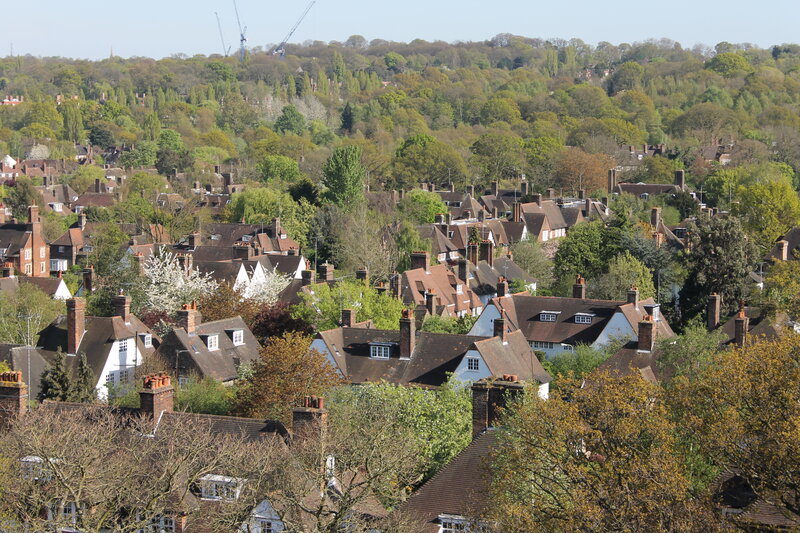
Hampstead Garden Suburb is dominated by the verdant green of foliage and the dappled red and brown of tiled roofs. This is an appearance that evokes the old villages of the south-east, a principal influence in the neighbourhood’s design.
The designers of the Suburb valued local forms and traditional craftsmanship in their buildings. Many, as young architectural assistants, escaped their Victorian drawing offices to learn from local craftspeople and sketch the vernacular buildings of villages around London. The charm of these dwellings, which had aged handsomely and were made with local materials, contrasted with contemporary urban housing developments, roofed with hard Welsh slate or slick machine-made tiles.
This vernacular tradition was important to the builders of the Suburb as a reaction to the loss of local character brought on by industrialisation. The proliferation of hard and shiny engineering brick, machine-pressed tiles and particularly slate was previously unknown. It endangered the thousand-year-old tradition of handmade clay tile roofing, which could have had a damaging impact on English architecture had the attractiveness of these roofs not been recognised and sought to be replicated.
As fashions shifted after the First World War from neo-vernacular to Georgian revival styles, roof shapes grew less complex and picturesque in the Suburb. The assortment of gables, valleys and ridges were replaced with comparatively simple hipped or pitched roofs. Architects introduced more formal elements such as moulded cornices and brick parapets while retaining the colour and texture of the clay tiles, plain or pantile. The consistency of the use of similar tiles throughout its growth has contributed greatly to the cohesion between the pre- and inter-war Suburb.
With the development of the Suburb mostly wound up by 1939, and the close control exercised by the Hampstead Garden Suburb Trust to this day, the roofs have changed very little, except, as put by the architects Bunney & Field, to be ‘touched by the softening hand of Time, acquiring year by year an added beauty of the rarest order, a gift from nature working in sympathy, as it were, with man's efforts and ideas.’