Credit: András Balogh
art studio
Gunner Orefelt, 1999
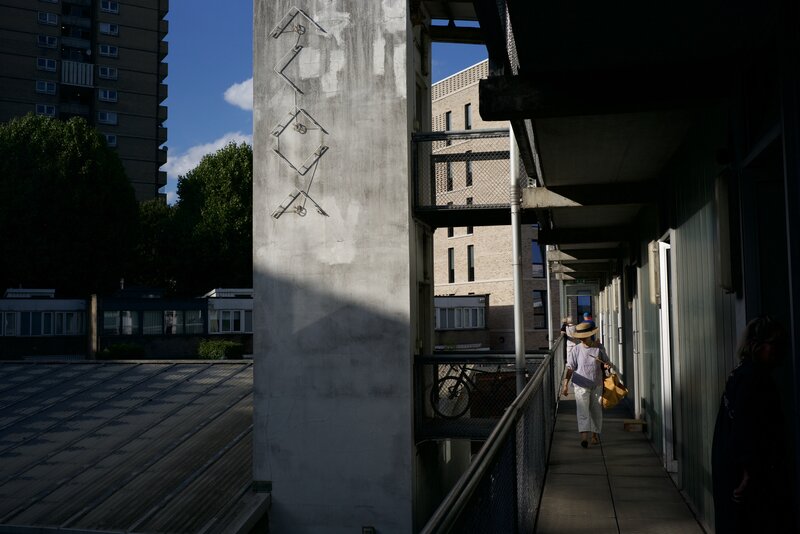
Blechynden Street Studios is a purpose-built artist studio complex in London, completed in 1999. It was the first of its kind in the city for decades and remains one of the few dedicated studio buildings in London. The distinctive deck-style architecture features walkways leading to 21 individual studios, each with floor-to-ceiling double-glazed windows that provide natural light.
Latimer Road
Credit: András Balogh
Blechynden Street Studios is an unusual example of a ‘purpose-built artists’ studio building in London’ Designed by architect Gunnar Orefelt and completed in 1999, its 21 studios are arranged along open walkways, with large floor-to-ceiling windows bringing natural light directly into the working spaces.
The building’s distinctive functional, almost industrial character is said to have been influenced by the photographic Typologies of German conceptual artists Bernd and Hilla Becher, who documented water towers, factories and other industrial structures as repeated architectural forms.
For Open House, visitors will have a rare opportunity to go beyond the exterior and see a working artists’ building from the inside. Studios will open their doors, offering glimpses into different practices, materials and ways of working — from painting and sculpture to ceramics.
Children and families will be invited to become architects for the day, using drawing, collage and simple model-making to design their own imagined buildings.
Starting with a closer look at Blechynden Street Studios and the photographic Typologies of Bernd and Hilla Becher, participants can explore repeated shapes, windows, grids, towers and industrial structures, then use these ideas as a starting point for a building of their own.
The workshop encourages children to look differently at the architecture around them: to notice how buildings are put together, what gives them character, and how a functional structure can also become something visually fascinating.
Visitors will also be able to look behind the scenes of a purpose-built artists’ building, seeing the studios where artists work and how different creative practices inhabit the same architectural structure.
Drop in / Other
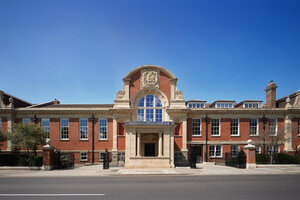
Set in the historic Sunbeam Talbot factory, a 1903 Beaux Arts building in Ladbroke Grove, Ladbroke Hall perpetuates the building’s legacy of innovation and creation. A space for exploration, inspiration and connection, across the many forms of arts and creative expressions, its seasonal live cultural programming celebrates the best of arts, live events and food.
Charles Garrard, 1903