Credit: Trent Park House
Credit: Trent Park House
Credit: Trent Park House
Credit: Trent Park House
Credit: Trent Park House
historical house, garden
norah lindsay, philip tilden, col r cooper, Sir William Chambers, Charles Holden, 1890
Trent Park House, Daffodil Crescent, Enfield, EN4 0PS
what3words: linen.goad.prep
Trent Park House of Secrets is a new museum in a historic country house in Enfield, North London, which recently opened to the public. From glittering 1930s social hub to WWII interrogation centre, the stately home witnessed some of the most closely guarded secrets of the 20th century. This extraordinary story of espionage, courage and creative deception has remained largely untold for over 70 yea
Oakwood, Cockfosters
There will be a regular shuttle bus from Oakwood Station to take museum visitors to the House.
We are within easy reach of the M25 Junction 24. There is free council car park. There are Blue Badge parking spaces at the House.
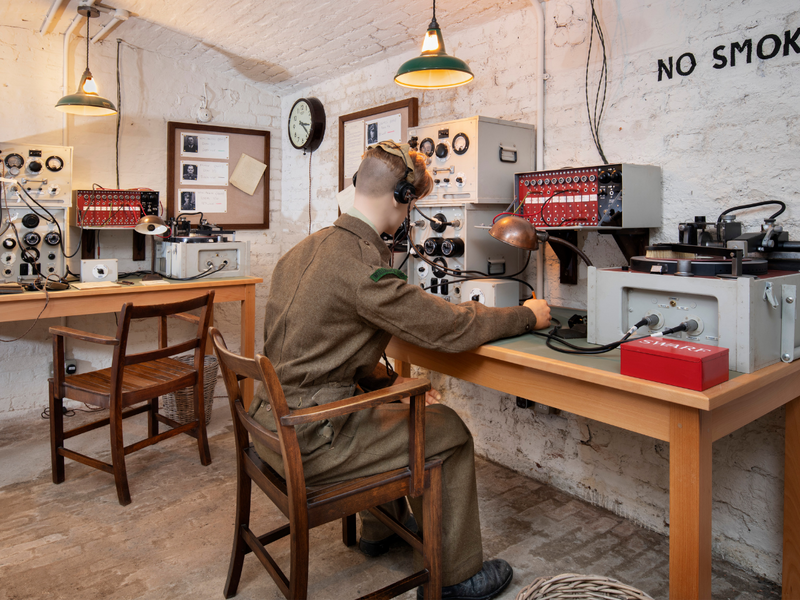
The tour will be across two floors (accessible via a disabled lift) - state rooms on the ground floor & the basement 'Secret Listener' rooms
Credit: Trent Park House
Credit: Trent Park House
Credit: Trent Park House
Credit: Trent Park House
Credit: Trent Park House
Guided tour
10:00–11:00
There will be twenty tickets available for each tour, so 60 in total across the day
Past event
Guided tour
11:30–12:30
Past event
Guided tour
13:30–14:30
Past event
The story of Trent Park begins in 1779 when George III presented the royal doctor Sir Richard Jebb with a 99-year lease on 250 acres of the royal estate at Enfield. The gift was in recognition of his life-saving treatment of his brother, the Duke of Gloucester, in Trento, Italy. Jebb named his property Trent to memorialise the event.
George III’s architect, Sir William Chambers, was commissioned by Jebb to build a house on his new estate. This was an elegant, but relatively small, villa centred on a high domed music room facing an artificial lake. The house was finished to a high standard costing Jebb the enormous sum (for the time) of £19,000.
After his death it passed through several hands before being purchased in 1833 by David Bevan, a local Quaker who was a successful banker. Trent Park passed to his son and his grandson, Francis, who extended and rebuilt the house in the 1890s in the Victorian style. Eventually, in 1909 the lease was sold to Sir Edward Sassoon. Sir Edward was the head of a Jewish merchant dynasty who had moved to London in the 1870s. He only enjoyed the property for a few years, dying in 1912 and leaving Trent Park, several other houses and a large fortune to his son Philip.
Philip Sassoon inherited the House in 1912. He also owned a grand townhouse in Park Lane and an exotic retreat created for him at Port Lympne in Kent.
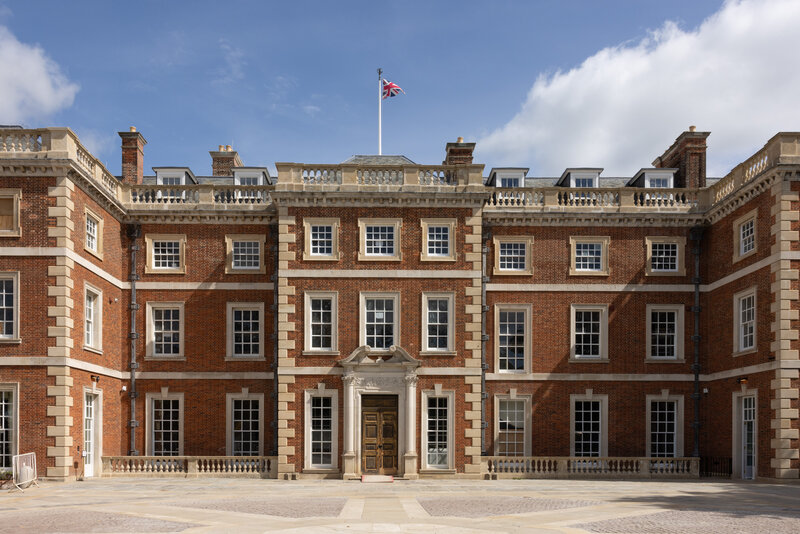
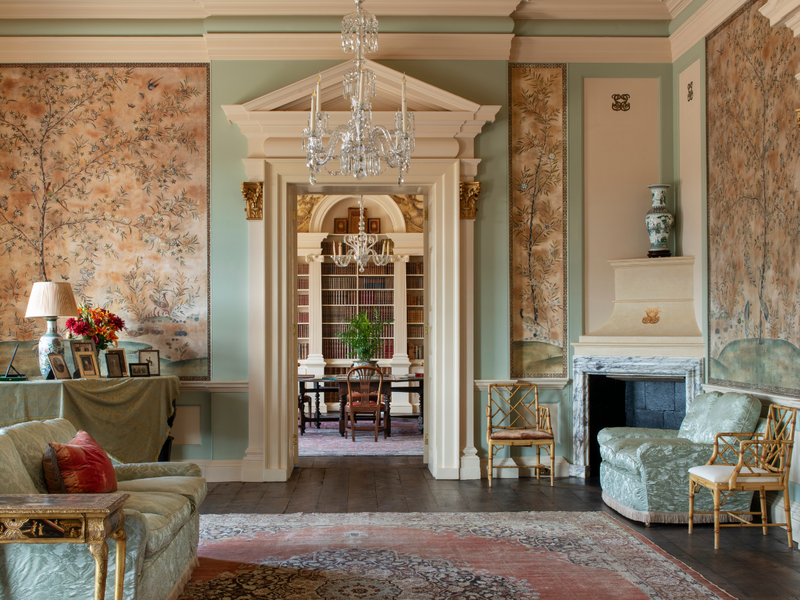
After World War I Philip Sassoon remodelled Trent Park on the lines of an early Georgian country house, using bricks from the demolished Devonshire House in Piccadilly and reclaimed architectural features. Sassoon’s artist friend Rex Whistler added decorative murals and painted details in the principal rooms. The estate acquired a golf course and an airstrip and Trent Park became one of the most fashionable houses of the 1930s, with Edward VIII, Winston Churchill, politicians, artists and writers as regular guests.
Philip Sassoon died of influenza in June 1939. Trent Park was left to his cousin Hannah Gubbay although she never lived in the house itself, while his collections and the bulk of his fortune went to his sister Sybil, who had married the Marquess of Cholmondeley of Houghton Hall in Norfolk.
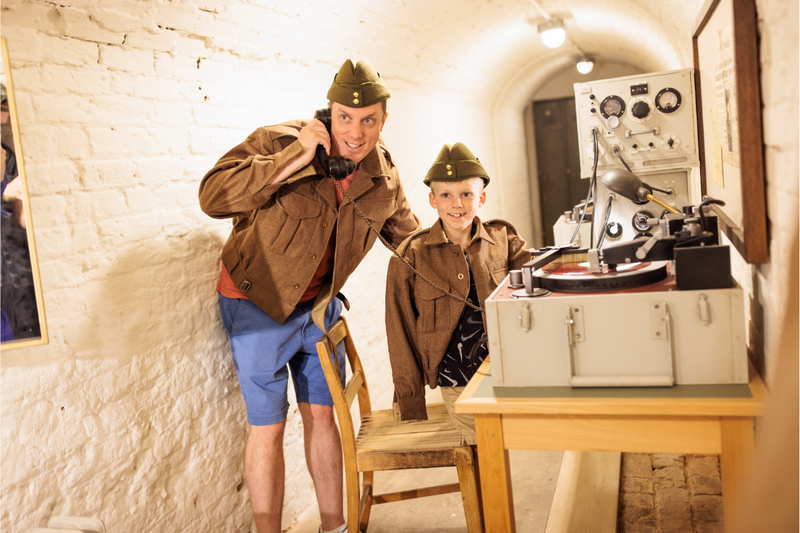
In the winter of 1939/1940, under the direction of Lieutenant Colonel Thomas Kendrick, Trent Park House and grounds were transformed into a state-of-the-art surveillance centre. Interrogation blocks and administrative offices were built in front of the house, and the house itself was adapted and installed with a complex network of miniaturised bugging devices, hidden in every corner including walls, light fittings, plant pots, window ledges, the billiard table and even the garden benches.
The German generals held as prisoners of war were encouraged to relax in relative comfort, unaware the site was bugged and their conversations were providing intelligence. They could wander the gardens, listen to the radio and read books from the full German library “borrowed” from the abandoned German Embassy. There were even trips to London and the services of a visiting tailor to press and maintain their uniforms.
Around one hundred secret listeners worked across the three Combined Services Detailed Interrogation Centre (CSDIC) camps, about forty of them stationed at Trent Park. Many were German-speaking Jewish refugees recruited from the Pioneer Corps, able to follow the technical language and regional accents they heard.
Kendrick also introduced carefully selected “stool pigeons” into the company. These were undercover interrogators posing as captured German officers or members of the British aristocracy with Nazi sympathies. These stool pigeons would lead captives into conversation on certain topics.