From the historic Piccadilly to the quintessentially British Jermyn Street and St James’s, this neighbourhood brings together some of London's most iconic destinations. Explore cultural institutions, historic buildings and hidden corners through a programme of open days, walks and talks celebrating the area's rich architectural and cultural heritage.
Produced in partnership with Heart of London Business Alliance.
Drop in
institution/profession, library, education, scientific
The world's oldest active biological society. Founded in 1788, the Society takes its name from the Swedish naturalist Carl Linnaeus whose botanical, zoological and library collections have been in its keeping since 1829.
Robert Richardson Banks and Charles Barry, 1873
The Royal Astronomical Society (RAS) moved into Burlington House in 1874. Part of the extension to Burlington House, to provide accommodation for learned societies, the building was refurbished in 2007. The RAS is the oldest astronomical society in the world and has been encouraging and promoting the study of astronomy and geophysics since 1820.
Robert Richardson Banks and Charles Barry, 1874
Experience the history, architecture and science of the east wing of Burlington House that's been home to the Royal Society of Chemistry (formerly The Chemical Society) since 1967. The east and west wings, along with the facade along Piccadilly were built in 1873 as an addition to the existing house that was originally built in 1664.
Robert Richardson Banks and Charles Barry, 1873
Drop in / Guided tour
institution/profession, library, museum
The Society of Antiquaries of London has been exploring the material past since the early eighteenth century. In the 1870s, the Society set up home in purpose-built grade II* listed apartments in Burlington House, with a grand galleried library housing 130,000 books. Today's membership of 3,000 Fellows are leading experts in archaeology, history, art, architecture, and heritage.
Charles Barry Jr., 1875
Home to the oldest geological society in the world, founded in 1807. The Society has been based at Burlington House since 1874, and now has over 12,000 members worldwide.
Robert Richardson Banks and Charles Barry, 1873
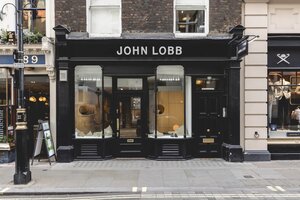
Founded in 1866, John Lobb prides itself on upholding its exacting standards and unique levels of craftsmanship in the creation of hand-made shoes and boots for men. See the shop transformed from a beautiful Grade II listed building to it's modern look. Also a former residence of (Sir) Isaac Newton, 1696-1700, in which he lived for four years.
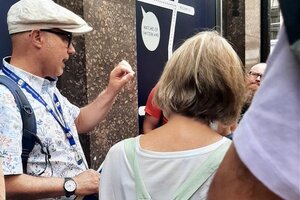
A guided walk looking at the building materials that built a city. The 90 minute tour around Piccadilly looks at the various rocks that have been used to face the buildings. The tour uncovers the history and geology behind the key building materials of London. The tour is lead by Dr Stephen King, a qualified Westminster tour guide and geologist.
Various architects, 0
St James's Piccadilly is a Grade I listed Christopher Wren church in the heart of the West End. Completed in 1684, and known as the Artists' Church, its interiors include historic works of art by Grinling Gibbons (reredos, organ case and font), postwar Classical interiors by Albert Richardson, and contemporary art by Che Lovelace honouring the 18th-century abolitionist Quobna Ottobah Cugoano.
Christopher Wren, 1684