Credit: Tess McCann
walk/tour
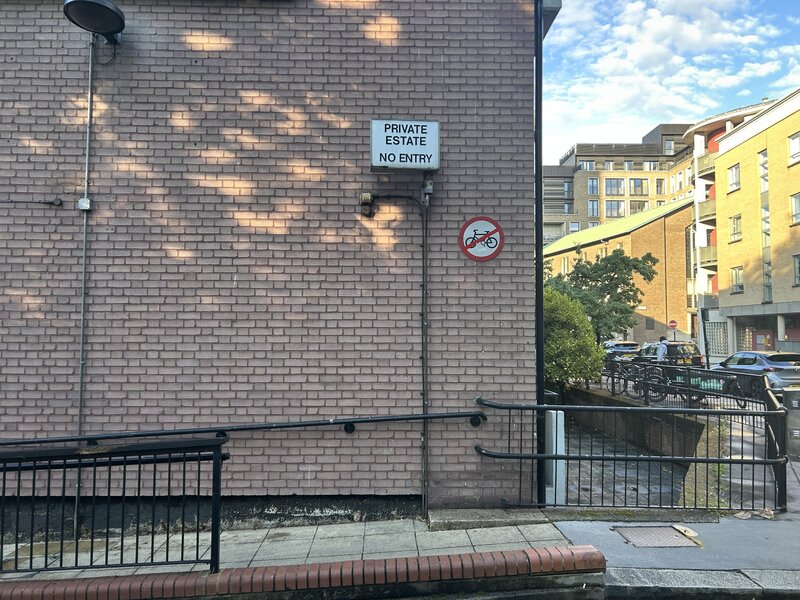
On the borderlands of the City of London, this walk explores how authority and ownership shape our public spaces. It traces the hidden boundaries between different types of public space, asking who gets to make the rules, who benefits, and what the answer tells us about power, property, and public life in the city we share.
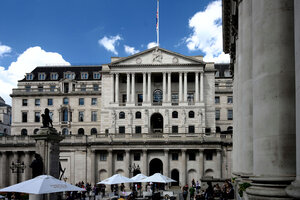
Bank
Cannon Street
The tour will begin at Bank station and end at the Barbican (closest stations, Barbican or Moorgate).
There will be multiple places to sit along the tour route.
Credit: Tess McCann
It's easy to take public space for granted. The space between buildings so often feels like it's just there, the bits left over when buildings get built. But plazas, courtyards, parks, and even the most everyday pieces of the public realm, like roads and pavements, can tell stories about the priorities of a given time and about the power dynamics of citymaking. And knowing these stories can make us more engaged and conscientious urban citizens.
We begin at Bank junction, one of the most recent public space improvements in the capital, and from there cover the history of how different kinds of public spaces and improvements were delivered, ranging from turnpike authorities to the Metropolitan Board of Works to development corporations. The tour begins from a belief that who owns our public spaces, who manages them and how they came to be all impact how they are designed and used.
This is not a simple story of bad guys and good guys, of privately-owned public space (POPS) and true public space. As in many things, the reality of making public spaces is much more nuanced: publicly-owned spaces can be influenced by private interests, and privately-owned space can be among the most welcoming and public-feeling. Across the centuries, cities have often relied on pseudo-private entities to deliver spaces and infrastructures, particularly when these cross London's many municipal boundaries.
This tour aims to give participants the language to interpret these dynamics on their own, as people who enjoy—and can demand more of—the public spaces in their cities.
Tess is an urban designer, planner and historian. She works at Publica, a urban research and design practice that has a particular focus on the public realm. She is a keen enthusiast of historic maps.
The Golden Key Academy is a course training up insightful and engaging guides dedicated to explaining London and bringing its many stories to life. This tour is part of a wider collection of tours created by Golden Key Academy guides for the Open House Festival celebrating their conclusion of the eight month course.
Further information on the Golden Key Academy can be found here https://open-city.org.uk/golden-key-academy
If you would like to attend this tour, please ensure you have booked a ticket before turning up.