
From Roman walls and medieval churches to contemporary architecture and new public spaces, Aldgate is a neighbourhood shaped by centuries of change. Straddling the City of London and the East End, it has long been a gateway to the capital and continues to evolve today. Explore the buildings, places and stories that define this historic neighbourhood.
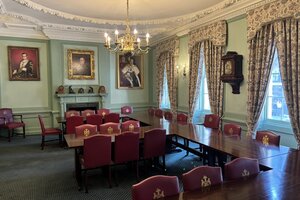
Coopers' Hall is a late 17th century, timber-framed merchant's house with a Georgian frontage. A Livery Hall since 1957, it features a fine Courtoom, dining room and an impressive staircase spiralling up the entire height of the building. The building displays artefacts of the coopers' trade (the making of wooden casks such as barrels) and is the home of the Worshipful Company of Coopers
Nicholas Barbon, 1690
This year marks LUC’s 60th anniversary. We are celebrating a legacy founded by two landscape architects and an ecologist, built on creativity, collaboration, and meaningful design. To mark the occasion, we are showcasing five projects highlighting the breadth and diversity of LUC’s work across disciplines and design approaches. Together, they demonstrate our thoughtful and impactful work.
Walking tour
Absorb the fascinating history of ancient Londinium, visiting sites where the Romans lived, worked, and played.
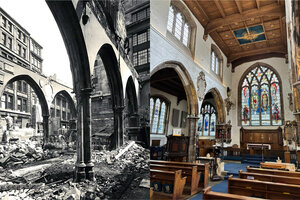
A Great Fire Survivor, damaged in the blitz, the post war restoration of this fascinating building began 75 years ago this year. Described by John Betjeman as a 'country church in the world of Seething Lane' the building uniquely blends medieval fabric with Festival of Britain era motifs. Explore the medieval crypt, 'Pepys' vestry, church tower and ringing room. Bellringing demonstrations.
, 1450
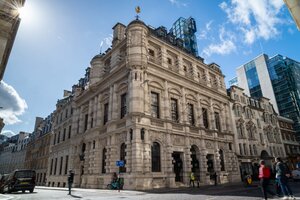
The Lloyd’s Register Building at 71 Fenchurch Street, is the historic headquarters of Lloyd’s Register. Opened in 1901 and designed by Thomas Collcutt, it is a grand classical stone palazzo with rich decorative detailing that reflects the organisation’s status and global ambition. Its architecture combines ornate interiors and artistic craftsmanship with new contemporary workspaces and innovation.
Thomas Collcutt, 1901