Spend a day exploring Hampstead & Highgate, an area shaped by centuries of cultural, intellectual and architectural history. From the open landscape of Hampstead Heath to the streets and squares that have long attracted artists, writers, architects and émigré communities, the area offers a rich mix of historic buildings and places of cultural significance. Alongside historic houses such as Burgh House, 2 Willow Road, Fenton House, Kenwood House and Lauderdale House, visitors can also discover hidden gems including Keats House, the Isokon Gallery and the Freud Museum, each reflecting a different chapter in the story of this distinctive part of north London.
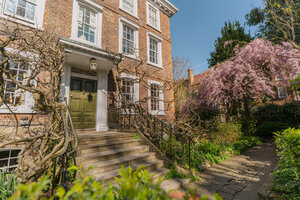
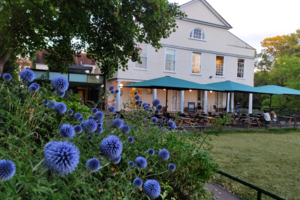
Built in 1704 and 1720, Burgh House is a Grade I Listed Queen Anne and early Georgian house situated in the heart of Hampstead Village. As an independent charity, it serves as a cultural hub bringing together heritage, art and community programming. Burgh House is also an Arts Council England accredited museum with a collection relating to Burgh House and the local area.
Unknown, 1704
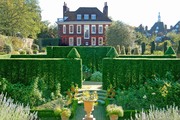
Beautiful town house retaining many original features and housing important decorative arts collections. Surrounded by a walled garden.
William Eades, 1686
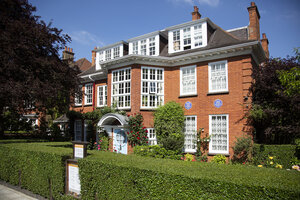
Freud Museum London is the final home of the founder of psychoanalysis, Sigmund Freud, where he and his family moved to flee Nazi persecution in 1938. Freud's famous study has been preserved as he left it upon his death in 1939, while the rest of the home has been carefully transformed into a Museum celebrating the life and work of Sigmund and his daughter Anna, a pioneering child psychologist.
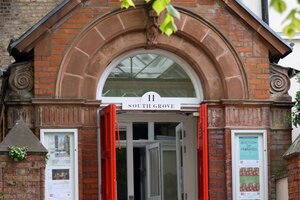
Listed Arts and Crafts freestyle building with plain interior and many charming original features, sympathetically modernised in 1991. Entrance via listed gateway.
Frederick Rowntree, 1907
Fine stuccoed building overlooking Pond Square, and home to the Institution since 1840. Formed from 1790 coach house, stables and yard, with final additions c1880. Guided tours will be available.
R Parkinson remodelled, 1840
Grade I listed 1934 residential block of flats in Hampstead, designed by the Canadian modernist architect Wells Coates for clients Jack and Molly Pritchard. English Heritage blue plaque for Bauhaus masters Gropius, Breuer and Moholy-Nagy. Museum on site.
Wells Coates, 1934
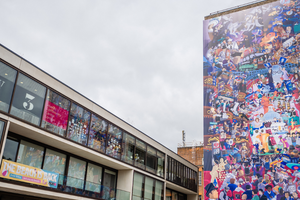
JW3 is the first and only Jewish Community Centre and arts venue of its kind to exist in UK. Architecturally award-winning, we are an open and welcoming Jewish space that brings different people together, strengthens identities, and builds community through arts, culture, education, and social action.
LifschutzDavidson Sandiland, 2013
Keats House is the beautiful Regency villa, where Romantic poet John Keats found inspiration, friendship and love. Today, it is a museum provided by the City of London Corporation for the benefit of London and the nation. Our current art exhibition, The Nightingale Suite, is inspired by the birdsong about which Keats wrote 'Ode to a Nightingale' when he was living at the House.
William Woods, 1814
A striking Neoclassical villa in tranquil gardens on Hampstead Heath, Kenwood boasts breath-taking interiors by Robert Adam and a world-class art collection.
Robert and James Adam, 1764
Drop in / Guided tour
historical house, concert/performance space, gallery, mixed use
Grade II* listed building in Waterlow Park dating to 1582. Original Tudor wooden framework adapted by successive owners over the centuries. Today the House runs primarily as an arts, heritage and education centre.
Haines Phillips Architects, 2016