Discover the stories that aren't always visible from the outside and uncover the layers of history hidden in these buildings and spaces.
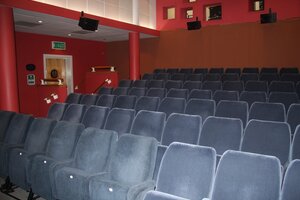
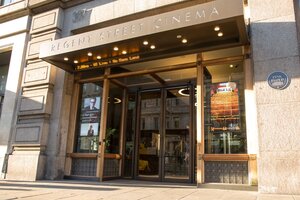
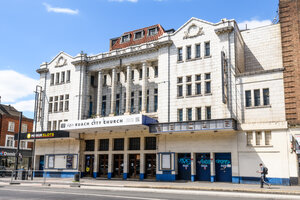
Croydon Council's ambitious 1990s Croydon Clocktower project created a large new central library. Former Town Hall library and other spaces were then repurposed as arts venues which opened in 1995. These tours will outline how this was achieved, with particular emphasis on the David Lean Cinema, and will include a brief talk on the cinema's eventful history.
Tibbalds Monro, 1995
Paradise works artist studios in the Old Carbonic Works that is thought to be the birthplace of commercial fizzy drinks in the late 18th Century. It features in the Lea Valley and Hackney Conservation area report found online. https://hackney.moderngov.co.uk/documents/s68747/240220%20Appendix%20A%20Lea%20Bridge%20Conservation%20Area%20Appraisal.pdf
Lansbury Lawrence (formally Susan Lawrence and Elizabeth Lansbury) opened in the 1951 Festival of Britain as a showpiece of the Live Architecture exhibition in the Lansbury Estate. An interesting mid-century design with original features.
Yorke Rosenberg Mardall, 1951
Iconic Victorian covered market, with roots in Roman Londinium. Today, more than 40 renowned retail brands and outstanding food and drink venues are set within the stunning market place.
Sir Horace Jones, 1881
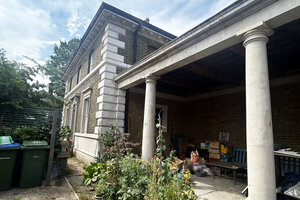
18 Woolwich Road is a listed building known as the "Lodge", and part of the Greenwich Royal Hospital the entrance gatehouse of the third cemetery now a public park the Pleasaunce. The building is now a house occupied by Artist Fran Cottell who has added an extraordinary history using the house for her own work. A glazed roof to the rear addition has been designed by Elden Croy Architect.
Elden Croy Architects, 2026
A Victorian Gothic Revival church hidden within Battersea's Shaftesbury Park Estate. Built in 1901 by architect G.H. Fellowes Prynne, it served the growing community before becoming a vibrant hub for Orthodox worship. Now home to a beautiful collection of icons donated from across the Orthodox world, alongside beautiful stained glass and original architectural details.
G H Fellowes Prynne, 1901
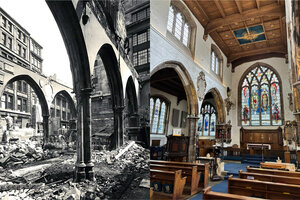
A Great Fire Survivor, damaged in the blitz, the post war restoration of this fascinating building began 75 years ago this year. Described by John Betjeman as a 'country church in the world of Seething Lane' the building uniquely blends medieval fabric with Festival of Britain era motifs. Explore the medieval crypt, 'Pepys' vestry, church tower and ringing room. Bellringing demonstrations.
, 1450
Guided tour
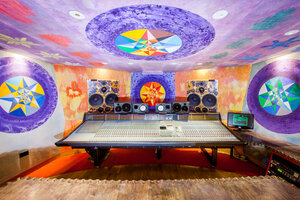
Established 1984, Strongroom has produced some of the biggest records in British music and remains the largest independent recording studio in East London. Featuring unique visual design by legendary artist Jamie Reid (Sex Pistols), these spaces are unlike any other. Reid's work draws from druidic culture and sacred geometry to convey vital messages of hope, environmentalism and anti-fascism.
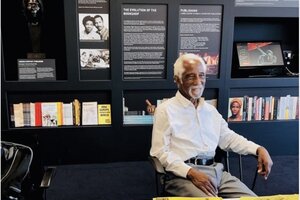
Join a tour to learn about the of the history of Tower House, home of The Mosaic Rooms in Earl's Court. Built in 1872 by Thomas Huggett, the tour will also shed light on the interesting story of its former resident, the impresario Imre Kiralfy. See the building and the traces of its history in this walk-through with a presentation of visual materials about the previously unseen interiors.
Thomas Huggett, 1872
Tucked away on Ashwin Street, this 1870 Victorian factory for Reeves & Sons paint survived the Blitz. Decades later, after housing railway engineers and hosting 1980s reggae sound systems, Bootstrap Charity saved it from developers. Now called The Print House, this cornerstone of the Dalston Cultural Quarter boasts a unique World War II bunker space alongside its studios and iconic Roof Park.
Edwin Henry Horne, 1870
Welcome to Woolwich Works - a multi-disciplinary cultural hub on the Royal Arsenal in Woolwich. Originally used in the manufacturing of armaments and ammunition, these five listed buildings now house cutting-edge contemporary music, award-winning stand-up comedy, as well as theatre, dance, cabaret and everything in between.
James Wyatt, 1718